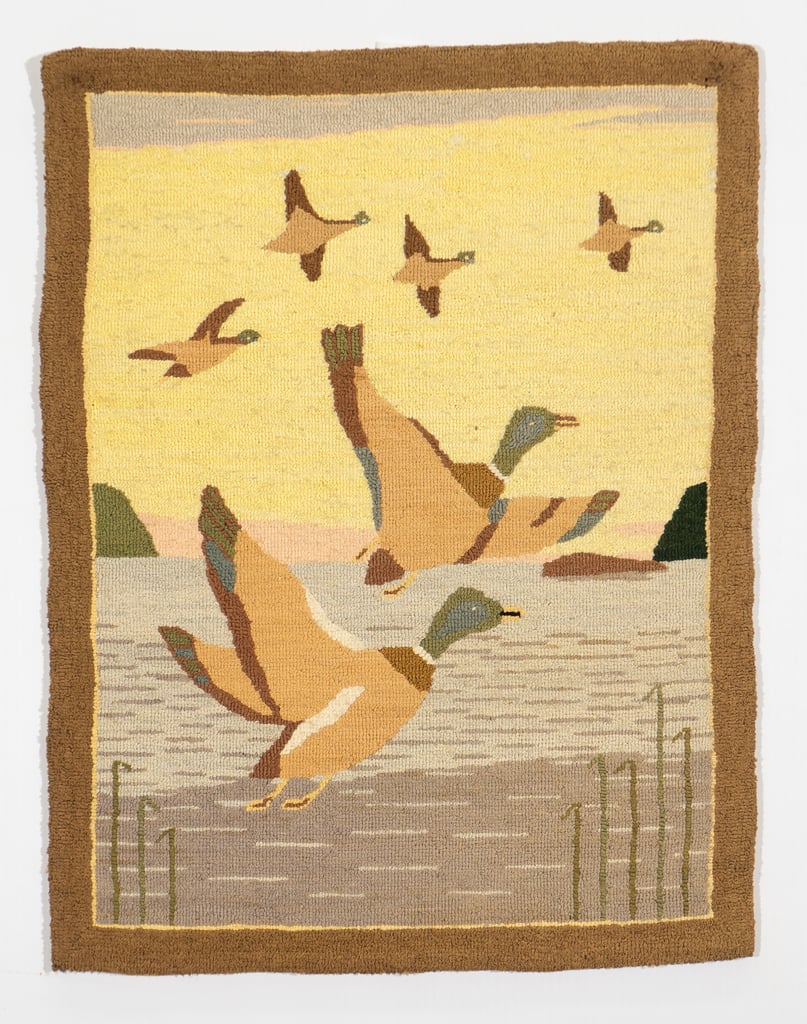
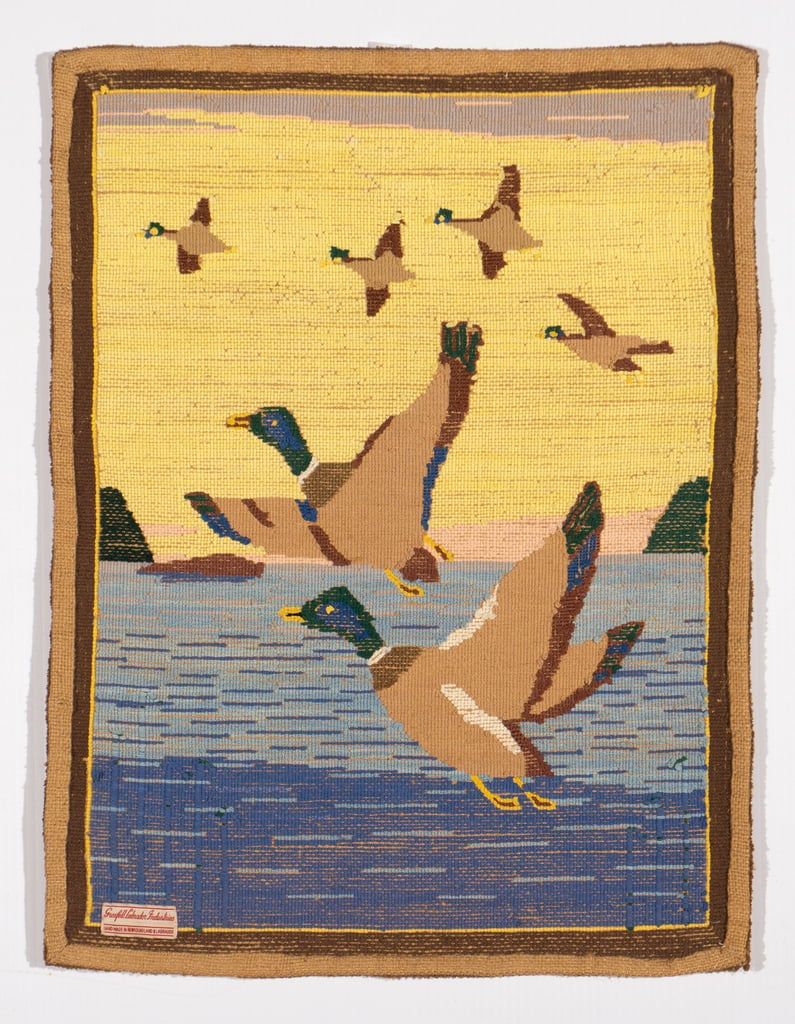
Untitled (Mallard Ducks)
This is a Grenfell Mission hooked mat from the late 1920s or 1930s, produced in Northern Newfoundland and Labrador, Canada. The mat depicts a pictorial scene of wild ducks in flight over water against a yellow and pale pink sky, with distant islands and foreground marsh grass. The composition is framed by a wide, solid brown border.
It is hand-hooked using dyed silk and rayon stocking and underwear fabric onto a burlap ("brin") backing. The craftsmanship utilizes the specific Grenfell Mission technique of straight horizontal line hooking through every hole in the mesh, achieving a high stitch density of up to 200 stitches per square inch. This technique creates a dense surface and subtle color gradients, particularly visible in the sky and water.
The history of the Grenfell mat industry began in the early 1900s following the arrival of Dr. Wilfred T. Grenfell in 1892. Seeking a long-term solution to rural poverty and disease, Grenfell worked with American artisan Jessie Luther in 1906 to establish a craft-based cottage industry known as "the Industrial". By 1928, supervisor M.A. Pressley-Smith spearheaded a widespread public campaign requesting donations of worn silk stockings and underwear, launching the peak production era of "silk-stocking mats". Production began to decline during the Great Depression due to shrinking funds and markets, and it dropped significantly after World War II.
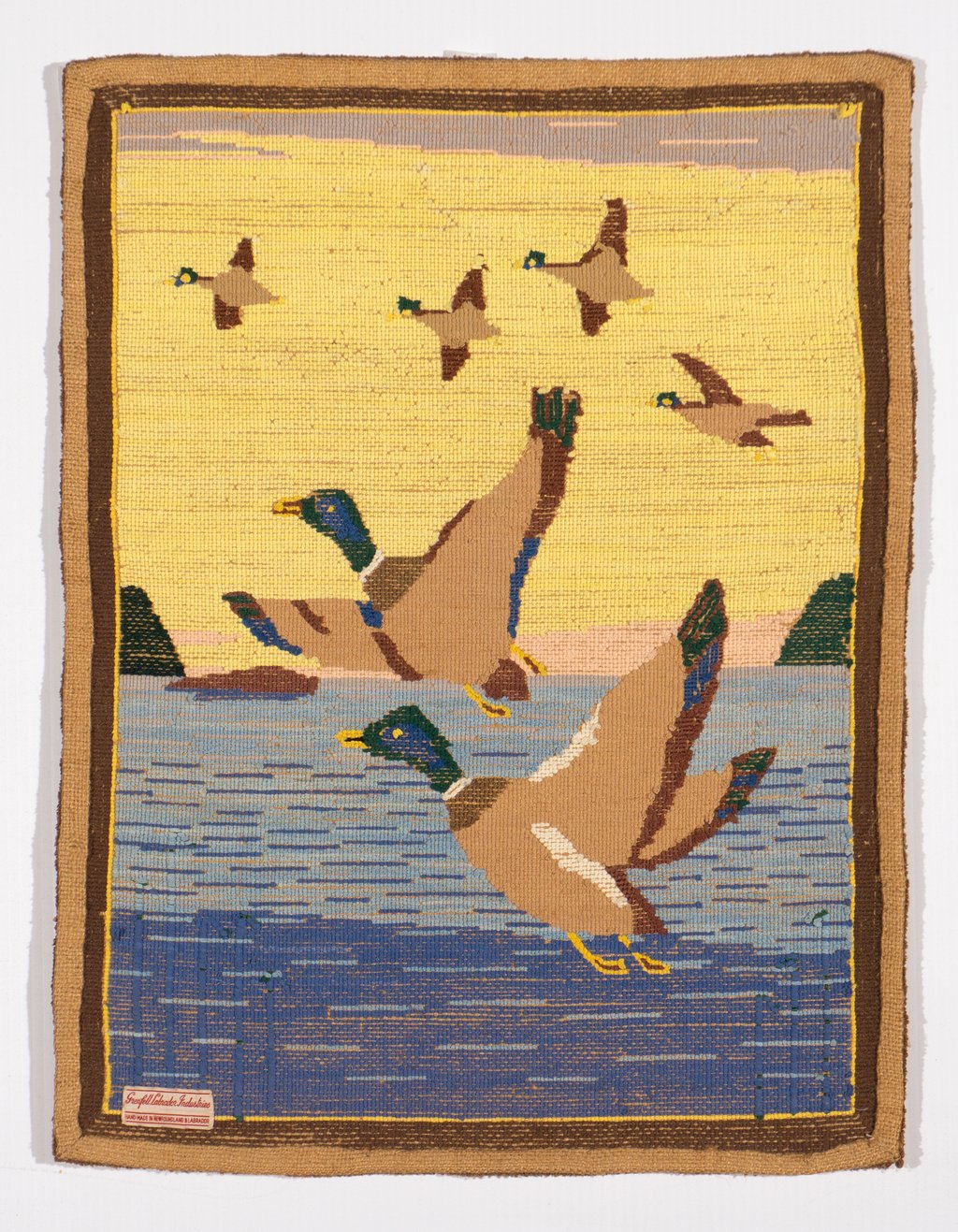
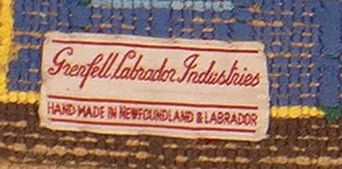
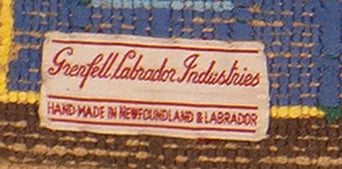
Grenfall Labrador Industries
Grenfell Labrador Industries (originally established under the International Grenfell Association) was a cottage industry initiative active in northern Newfoundland and coastal Labrador throughout the twentieth century. Founded in 1909 by British medical missionary Sir Wilfred Grenfell, the program was designed to provide supplemental income to coastal fishing families, particularly women, during winter months and economic downturns.
The organization is best known for its production of handcrafted textiles, specifically hooked mats and rugs. Production was organized through industrial centers across Newfoundland and Labrador, most notably in St. Anthony. Local artisans executed designs created by organizational staff and volunteer artists, including Jessie Luther, who helped establish the early craft workshops. The hooked mats were constructed using a distinctive technique that incorporated narrow strips of recycled stocking fabric, flannel, and dyed cotton pull-throughs worked into burlap backings.
The visual iconography of Grenfell hooked mats focused on northern subjects, including polar bears, sled dog teams, puffins, icebergs, seal hunts, and coastal village scenes. In addition to hooked rugs, the industry produced embroidered parkas, ivory carvings, wood products, and woven textiles. Each piece was typically marked with a woven fabric label reading "Grenfell Labrador Industries" or "Grenfell Cloth" to verify its origin.
Production continued through the mid to late twentieth century before operations ceased as economic and industrial conditions in the region changed. Items produced by Grenfell Labrador Industries are preserved in public museum and textile collections, including the The Rooms Provincial Museum in St. John's, the Canadian Museum of History, and the Textile Museum of Canada.